Understanding Tooth Abscess in Bhopal: Prevention and Expert Treatment

Dr. Tarun Pandey
BDS, MDS (ORTHODONTICS) · Bhopal

A tooth abscess is one of those dental emergencies that demands immediate attention. As someone who has spent over 15 years in clinical practice here in Bhopal, I've seen how quickly a simple infection can escalate into a serious health concern if left untreated. The good news? Most abscesses are entirely preventable, and when they do occur, modern dentistry offers excellent solutions.
In this guide, I'll walk you through what causes a tooth abscess, how to spot the early warning signs, and the treatment options available to you right here in Bhopal at Titanium Smiles.
How to prevent the need for tooth abscess in Bhopal
Prevention is always better than cure, and this principle holds especially true for dental abscesses. An abscess develops when bacteria invade the inner part of your tooth (the pulp) or the tissue around the tooth root, creating a pocket of pus and inflammation.
The foundation of prevention rests on these pillars:
Consistent oral hygiene: Brush your teeth twice daily with fluoride toothpaste, and don't rush—spend at least two minutes each time. Most people brush for only 30 to 40 seconds, which isn't enough to remove plaque effectively.
Daily flossing: This is non-negotiable. Floss once daily to remove food and bacteria from spaces your toothbrush cannot reach. These gaps between teeth are where decay often begins.
Regular professional cleanings: Visit your dentist every six months for a professional cleaning and examination. At Titanium Smiles, we use advanced ultrasonic scaling equipment to remove tartar buildup that brushing alone cannot eliminate.
Avoid sugary foods and drinks: Bacteria in your mouth feed on sugar and convert it into acids that erode enamel. Limit sugary snacks and beverages, and rinse your mouth with water after consuming them.
Don't ignore small cavities: A small cavity is easy to treat with a filling. If you ignore it, the decay will deepen and eventually reach the pulp chamber, requiring more complex treatment like root canal therapy.
Protect your teeth from injury: Wear a mouthguard if you play sports or grind your teeth at night. Dental trauma can lead to pulp damage, which can eventually result in an abscess.
Quit tobacco products: Smoking weakens your immune system and reduces your mouth's ability to fight infection. It also increases your risk of gum disease, which is closely linked to abscess formation.
Manage your stress: Stress can weaken immunity and increase teeth grinding. Both factors raise your abscess risk.
Early warning signs you shouldn't ignore
The earlier you catch an abscess, the simpler the treatment. Here are the symptoms that should prompt you to call us immediately:
Tooth pain and sensitivity:
Sharp, throbbing pain in the affected tooth—often severe enough to wake you from sleep.
Extreme sensitivity to hot, cold, or pressure when chewing.
Pain that radiates to your jaw, ear, or neck.
Swelling and visible signs:
Visible swelling on your gum near the affected tooth, often appearing as a small pimple-like bump.
Swelling in your cheek, jaw, or face on the side of the infected tooth.
A red, warm area around the tooth.
Systemic symptoms:
Fever and general feeling of illness.
Swollen lymph nodes under your jaw or in your neck.
Difficulty swallowing or opening your mouth fully.
Pus drainage into your mouth, sometimes with an unpleasant taste.
Important note: Do not wait for the pain to subside on its own. Many patients assume that because the pain disappeared, the infection has resolved. This is dangerous—the infection may have simply spread deeper or drained partially, and it can flare up again with serious complications.
If you experience any of these signs in Bhopal, please reach out to us right away. Early intervention prevents the need for more complex procedures.
At-home care that actually works
While professional treatment is essential for an abscess, there are steps you can take at home to manage discomfort while awaiting your appointment:
Pain and inflammation management:
Take over-the-counter pain relievers like paracetamol or ibuprofen as directed on the package. Ibuprofen is particularly helpful because it reduces both pain and inflammation.
Apply a cold compress to the outside of your cheek for 15-minute intervals. This numbs the area and reduces swelling.
Avoid very hot foods and drinks, which can intensify pain.
Oral care during infection:
Rinse gently with warm salt water (half a teaspoon of salt in a cup of warm water) several times daily, especially after meals. This helps keep the area clean and may provide mild relief.
Continue brushing your teeth carefully, but avoid the infected area. Maintaining hygiene in the rest of your mouth is crucial.
Avoid very hard, crunchy, or sticky foods that might put pressure on the affected tooth.
What NOT to do:
Do not attempt to drain the abscess yourself. This can push bacteria deeper and worsen the infection.
Avoid over-the-counter antibiotics without professional guidance. Only a dentist can determine if antibiotics are appropriate for your specific situation.
Do not delay professional treatment. Home care manages symptoms temporarily but cannot cure an abscess.
When prevention isn't enough: treatment options
When a tooth abscess has developed, the goal is to eliminate the infection and save the tooth if possible. Treatment depends on the abscess location and severity.
Root canal treatment:
For an abscess at the tip of the tooth root (periapical abscess), root canal treatment is the gold standard. This procedure removes the infected pulp from inside the tooth, allowing the body to heal naturally.
The process involves:
Numbing the tooth with local anesthesia.
Creating a small access opening on the surface of the tooth.
Using specialized instruments called files to carefully remove the infected pulp tissue.
Cleaning and shaping the root canal system.
Filling the empty space with a biocompatible material called gutta-percha.
Sealing the access opening with a tooth-colored filling or crown.
Root canal treatment is highly effective, with success rates above 90% when performed correctly. Many patients worry about the procedure being painful, but modern techniques and anesthesia make root canal treatment painless. The pain comes from the infection itself, not the treatment that relieves it.
Scaling and root planing:
If the abscess is related to gum disease (a periodontal abscess), we perform scaling and root planing—a deep cleaning that removes tartar and bacteria from below the gum line. This often stops the infection without further intervention.
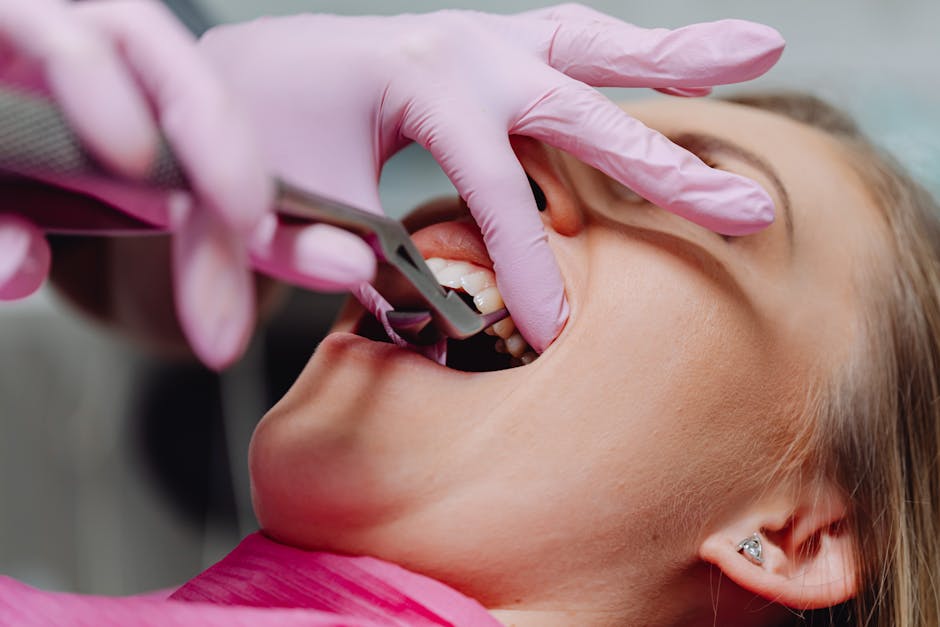
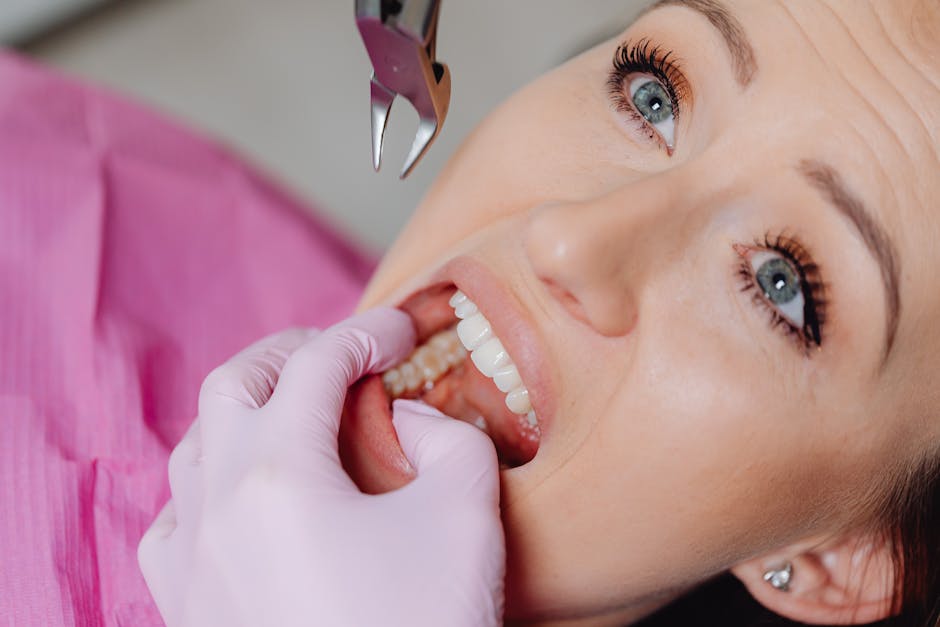
If the tooth is severely damaged and cannot be saved, extraction may be necessary. Following extraction, we discuss options for replacing the missing tooth, including dental implants, bridges, or dentures. At Titanium Smiles, we offer all these solutions to restore your smile and function.
Antibiotic therapy:
In some cases, your dentist may prescribe antibiotics to help your body fight the infection, particularly if:
The infection has spread to surrounding tissues.
You have a weakened immune system.
Signs of systemic illness are present (fever, swollen lymph nodes).
Antibiotics alone cannot cure a tooth abscess because they cannot penetrate the tooth pulp effectively. They are always used alongside the primary treatment, not instead of it.
Long-term outcomes to expect
With proper treatment, the prognosis for a tooth abscess is excellent.
After root canal treatment:
Pain relief is usually immediate once the infected pulp is removed.
The tooth remains in your mouth, functioning normally for many years or even a lifetime.
A crown is often recommended to protect the treated tooth and restore full chewing function.
Follow-up X-rays at 6 and 12 months confirm that healing has occurred.
Cost for root canal treatment in Bhopal typically ranges from ₹3,000 to ₹8,000, depending on tooth location and complexity.
After tooth extraction:
If you choose to replace the tooth with an implant, the process involves placing a titanium post in the bone and attaching a crown. This typically takes 4-6 months but provides the most natural-looking and functional result.
A bridge or denture offers faster solutions and lower upfront costs.
Prevention of recurrence:
A tooth that has had root canal treatment may develop another abscess in rare cases, usually due to breakdown of the filling material over many years.
Regular check-ups, good oral hygiene, and addressing new decay promptly prevent this.
Avoid chewing on hard objects (
Interested in treatment at Titanium Smiles?
Check our available slots for Bhopal patients →Dr. Tarun Pandey
BDS, MDS (ORTHODONTICS)
Specialist in Orthodontics & Invisible Braces and 15+ Years of Experience